20 DEFINITIVE FACTS FOR DECIDING ON THE SCEYE PLATFORM
Sceye and Softbank The Haps Partnership For Japan Haps Collaboration For Japan
1. This Partnership Is About More Than Connectivity
In the event that two firms with different backgrounds that are based in New Mexico — a corporation for stratospheric space and one of Japan’s largest telecoms conglomerates – agree to create a national network of high-altitude platform stations it’s more complicated than broadband. Sceye SoftBank’s Sceye SoftBank partnership represents a genuine bet on stratospheric infrastructure to be a continuous, profitable infrastructure for national communication -Not a pilot initiative or a proof for concept. It is rather the beginning of a full-scale commercial rollout with a set timeline and a national-scale goal.
2. SoftBank offers a reason to Back Non-Terrestrial Networks
The SoftBank interest in HAPS did not spring up out of thin air. Japan’s geography – thousands of islands, mountains and coastal regions often hit by earthquakes and typhoons can create persistent connectivity gaps that even ground infrastructure alone won’t be able to fill. Satellite connectivity helps, but delays and costs remain as limiting the market for mass-market products. The stratospheric layer, which is located at 20 kilometres, holding position above certain regions and delivering low-latency broadband to devices, addresses a variety of these issues at once. For SoftBank investing on stratospheric-based platforms is a logical extension of a strategy already in place to diversify beyond terrestrial network dependence.
3. Pre-Commercials Services Scheduled for Japan from 2026. This will create real Momentum
The key element that distinguishes this partnership from earlier HAPS announcements concerns the target of commercial services pre-commercialized in Japan starting in 2026. It’s not just a vague agreement, it’s an precise operational milestone with infrastructure, regulatory and commercial implications to it. In order to be considered precommercial, the platforms need to be performing station keeping reliably, delivering acceptable signal quality and connecting to SoftBank’s current network architecture. The fact that this date has been publicly proclaimed suggests both parties have met the technological and regulatory hurdles so that it is an actual target instead of an aspirational marketing strategy.
4. Sceye Delivers Endurance and Payload Capacity that Other Platforms Struggle to Match
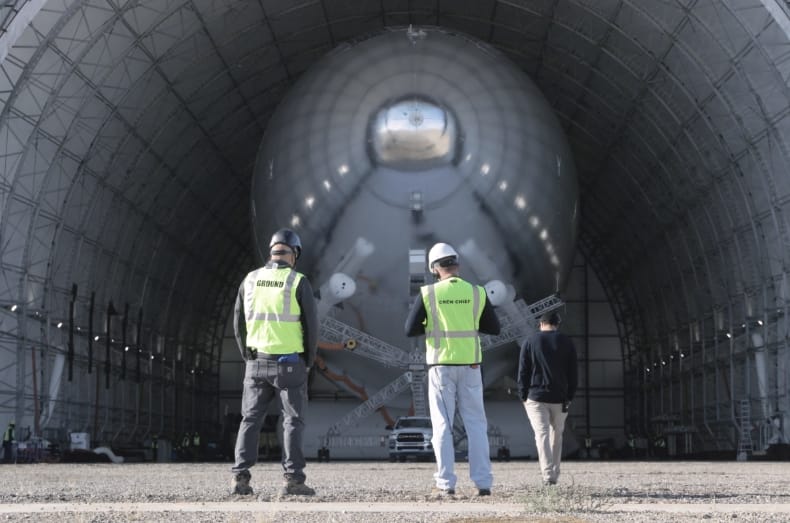
Not all HAPS vehicle can function as one of the national commercial networks. Fixed-wing solar aircraft typically sacrifice payload capacity for high altitude performance, which limits the amount and type of telecommunications equipment they can transport. Sceye’s airship with a lighter weight takes different route — buoyancy carries the vehicle’s weight which means the available solar energy will be used for propulsion along with stationkeeping, and charging onboard systems rather that simply keeping the aircraft in place. This architectural approach gives substantial advantages in payload capacity and mission endurance that matter hugely when trying to maintain continuous coverage in dense regions.
5. The Platform’s Multi-Mission Capability makes the Economics Work
One of many untapped aspects of the Sceye method is the simple fact that it doesn’t need to justify its operation cost solely on the basis of telecoms revenue. A vehicle that is capable of delivering stratospheric broadband could also carry sensors for monitoring greenhouse gases as well as disaster detection and Earth observations. In a country such as Japan who is at a high risk for dangers from natural disasters and has national commitments to monitoring emissions, this multi-payload system will make the infrastructure much easier to justify at the government as well as a commercial level. The antenna for telecoms and the sensors for climate don’t competethey’re part of a system with a standard that’s already in place.
6. beamforming as well as HIBS Technology Help to make the Signal commercially usable
Broadband service that extends to 20 kilometers is not just a matter of moving an antenna downwards. The signal needs to be planned, shaped and manipulated dynamically to provide customers effectively across a broad area. Beamforming technology allows the stratospheric telecom antenna to direct the signal’s energy the most needed areas, rather than broadcasting uniformly and using up capacity in empty ocean or uninhabited terrain. Combined with HIBS (High-Altitude IMT Base Station) standards that make the device compatible with the 4G and 5G devices in ecosystems, this means regular smartphones can be connected with no specialist equipment, a vital need for any mass-market installation.
7. The Japan’s Island Geography Is an Ideal Test Case for the rest of the world
If stratospheric communication works on a massive scale in Japan it becomes accessible to all other countries with comparable coverage challenges -that’s a lot nations around the world. Indonesia and the Philippines, Canada, Brazil, and numerous Pacific island countries all face different versions of the same issue with populations spread across terrain that defeats conventional infrastructure economics. Japan’s combination of technological sophistication, regulatory capacity, and real-world need provides it with the highest feasible test bed for the nation-wide network that is built on stratospheric platforms. Everything that SoftBank and Sceye show will be a source of information for deployments elsewhere for years.
8. The New Mexico Connection Matters More Than It appears
Sceye operating out of New Mexico isn’t incidental. The state has high altitude testing conditions, an established technology for the aerospace industry, and airspace that suits the kind of prolonged flight tests that stratospheric vehicle development requires. Sceye is among the more serious aerospace firms that operate in New Mexico, Sceye has developed its product in a setting that facilitates real engineering iteration instead of press release cycles. The gap between announcing a HAPS platform and actually maintaining on a consistent basis for weeks each time is immense, also the New Mexico base reflects a company who has been doing the difficult work to fill the gap.
9. The Founder’s Vision Has Shaped the Partnership’s Long-Term Strategy
Mikkel Vestergaard’s experience that is rooted in applying technology to environmental and humanitarian issues has affected what Sceye will build and the reasons. The alliance with SoftBank doesn’t simply a telecoms deal. Sceye’s focus at disaster prevention and real-time monitoring, and connectivity for regions that aren’t served are a result of a belief system that infrastructure in the stratosphere must serve various social, as well as commercial ones. This perspective has likely led to Sceye a better partner for a company such as SoftBank that operates in a regulatory as well as a public one where corporate motives are very important.
10. 2026 is the Year that of the Stratospheric Tier either Proves Itself or Resets Expectations
The HAPS sector has been promising commercial deployment for longer than most observers care to remember. What makes these timelines Sceye and SoftBank timeline genuinely significant is that it has to a specific nation, a specific operator, and even a service milestone to a specific year. If pre-commercial service offerings in Japan start as planned and work as promised 2026 will mark the point at which connectivity in the stratosphere shifts from promising technology to a functioning infrastructure. If it fails, the sector will have more to think about as to whether the engineering problems can be solved according to recent statements. It doesn’t matter, the collaboration has created a line in the sky that’s worth keeping an eye on. Take a look at the best non-terrestrial infrastructure for blog info including sceye careers, softbank sceye partnership haps, sceye aerospace, Cell tower in the sky, sceye connectivity solutions, sceye careers, Real-time methane monitoring, sceye haps airship status 2025 2026, natural resource management, softbank investment sceye and more.

Fire And Disaster Detection In The Stratosphere
1. The Detection Window Is the Most useful thing you can extend
Every important disaster has its own moment that is sometimes measured in minutes, often in hours — where early awareness could have altered the course of action. An unidentified wildfire when it covers a quarter of hectare is a problem of containment. The same fire found when it covers more than fifty hectares is a crisis. An industrial gas release detected in the first twenty minutes can be dealt with before it escalates into a public health emergency. The same leak that was detected at the end of the day, whether through the use of a ground report, or even a satellite flying overhead on its scheduled visit, has already taken on a new form, with there being no effective solution. The extension of the detection window is undoubtedly the most valuable feature that improved monitoring infrastructures can deliver, and persistent stratospheric observations are among the few approaches that changes the window with a significant impact, not insignificantly.
2. Wildfires are getting harder for the Forest Service to Monitor, despite existing infrastructure
The magnitude and frequency of fires that have occurred in recent years has outpaced the monitoring system designed to monitor them. Sensors on the ground monitor towers, sensor arrays ranger patrols, and watchtowers — contain too little territory too slow to capture fast-moving fires in their early stages. Aircraft response is efficient, but expensive, weather-dependent and reactive, rather than anticipatory. Satellites travel over a area in a sequence measured in hours, which means that a blaze that ignites as it spreads and crowns between passes doesn’t provide early warning. The combination and faster rates of spread driven durch droughts, and complicated terrain creates a gap that traditional approaches aren’t able to close.
3. Stratospheric Altitude Provides Persistent Wide-Area Visibility
A platform that operates at 20 kilometers above the surface is able to maintain a continuous view over a terrain footprint that extends hundreds of kilometres with fire-prone regions, coastlines, forest margins, and urban areas simultaneously, without interruption. The platform isn’t like aircrafts in that it doesn’t have to turn back for fuel. In contrast to satellites it doesn’t disappear over the horizon on the basis of a revisit cycle. In the case of wildfire detection, this wide-area, continuous view indicates that the system is in view when ignition occurs, watching as it spreads initially, and monitoring as the fire’s behavior changes — providing a continuous flow of data instead set of disconnected snapshots emergency management personnel must interpolate between.
4. Thermo- and Multispectral Sensors May Detect Fires Before Smoke Is Visible
Some of the most effective methods for detecting wildfires isn’t waiting at the sight of smoke. Thermal infrared sensors identify heat anomalies consistent with ignition before the fire has created any visible signature It can identify hotspots among dry vegetation, smoldering ground fires in the forest canopy and the early appearance of heat signals in fires that are starting to take shape. Multispectral imaging provides additional capabilities by detecting changes to the vegetation conditions — such as moisture stress Drying, browningand indicating an increased risks of fire in specific regions before any ignition events occur. The stratospheric platforms that use this combination of sensors gives immediate warning of active combustion and an in-depth understanding of where the next ignition is likely to occur, which offers a qualitatively broader range in terms of situational awareness than what conventional monitoring provides.
5. Sceye’s Multi Payload Approach Combines Detection with Communications
One of many practical ramifications of major catastrophes is that the infrastructure that people rely on for communication such as mobile towers, internet connectivity, power lines — is often among the first things to be destroyed or overwhelmed. A stratospheric base that has both disaster detection sensors as well as a telecommunications payload addresses this problem from one vehicle. Sceye’s mission approach considers observation and connectivity as complements rather than rival ones. The same platform that detects a fire in progress can also send emergency communication to those on the ground whose terrestrial networks have gone dark. The mobile tower in the sky not only sees the disaster but also keeps people connected through it.
6. The Detection of Disasters extends well beyond Wildfires
While wildfires are one of many compelling applications for persistent stratospheric monitoring, the same capabilities can be applied across a wider spectrum of scenarios for disaster. Floods can be tracked throughout the development of flood zones, river systems, and coastal zones. Aftershocks from earthquakes — that include damaged infrastructure, blocked roads and population displacementget the benefit of a quick wide-area evaluation that ground teams are unable to provide quickly enough. Industrial accidents releasing harmful gasses or oil pollution into coastal waters create signatures discernible by appropriate sensors from the stratospheric height. The detection of climate catastrophes in real time across kinds of climates requires a element that is in constant motion, always watching, and capable of distinguishing between environmental changes that are normal as well as the indicators of developing emergencies.
7. Japan’s Disaster Story Makes the Sceye Partnership Particularly Relevant
Japan is the site of a significant portion of major earthquake events, faces regular periods of typhoons that afflict coastal areas, and has an extensive history of industrial accidents needing a swift response from environmental monitors. The HAPS collaboration with Sceye and SoftBank is aimed at Japan’s entire system and its pre-commercial service in 2026, sits right between connections to the stratosphere as well as monitoring capabilities. A country that has Japan’s catastrophe exposure and technological sophistication is perhaps the ideal early adopter of stratospheric technology that combines security and coverage, as well as real-time monitoring — providing both the communication backbone emergency response relies upon and the monitoring layer required by early warning systems.
8. Natural Resource Management Benefits From the same Monitoring Architecture
The ability to sense and maintain that make stratospheric platforms highly effective for wildfire and disaster detection have direct applications in natural resource management that operate over longer timescales, yet require the same monitoring consistency. Monitoring forest health is tracking the spread of disease illicit logging, invasive logging, and plant alteration — is a benefit of ongoing observation that identifies slow-developing hazards before they reach acute. Monitoring of water resources across large areas of catchment coastal erosion tracking and monitoring of protected areas from incursions all feature applications where an observation platform at the stratospheric level continuously can provide actionable data that airborne or satellite surveys aren’t cost-effective enough to replace.
9. The Founder’s Mission Shapes Why Disaster Detection Is Central
Understanding the reasons Sceye is so focused on the prevention of environmental disasters and monitoring — rather than treating connectivity as the sole purpose and observation as a second-rate benefit- requires understanding the founding concept that Mikkel Vestergaard has brought to the company. An experience in applying the latest technology to tackle large-scale humanitarian challenges provides a different set requirements than a focused on commercial telecommunications. The capability to detect disasters isn’t built into a connectivity platform in the form of a value-added component. It’s a stance of conviction that the stratospheric network should be highly effective for the different kinds of situations — such as climate disasters, environmental crises, emergencies that require more timely and accurate information alters the outcomes for those affected.
10. Continuous Monitoring changes the relationship between Decisions and Data
The more profound shift that catastrophe detection at the stratospheric level enables doesn’t only provide faster responses to individual events it’s also a change in the way decision makers view the environmental risk over time. Monitoring is often intermittent, the decision about deployment of resources, evacuation preparations, and infrastructure investment are taken in the face of significant uncertainty about existing conditions. When monitoring is continuous in nature, that uncertainty can be reduced drastically. Emergency managers using real-time information feeds from an unreliable stratospheric station above their respective areas of responsibility are making decisions from totally different position of information than those relying upon scheduled satellite passes and ground reports. That shift — from snapshots that are periodic to continuous status-of-mind awareness is the main reason why stratospheric observation of earth through platforms like those developed by Sceye really transformative and not more incrementally valuable. Follow the most popular Stratospheric telecom antenna for more advice including Sceye Softbank, Monitor Oil Pollution, Stratospheric missions, non-terrestrial infrastructure, aerospace companies in new mexico, softbank investment in sceye, what haps, softbank investment in sceye, sceye new mexico, what does haps and more.
You may also like

Leave a Reply